Calories and Macros for Muscle Gain: How Much to Eat Per Day
How many calories you need to build muscle and how to split protein, carbohydrates and fat across the day, with a sample daily plan.
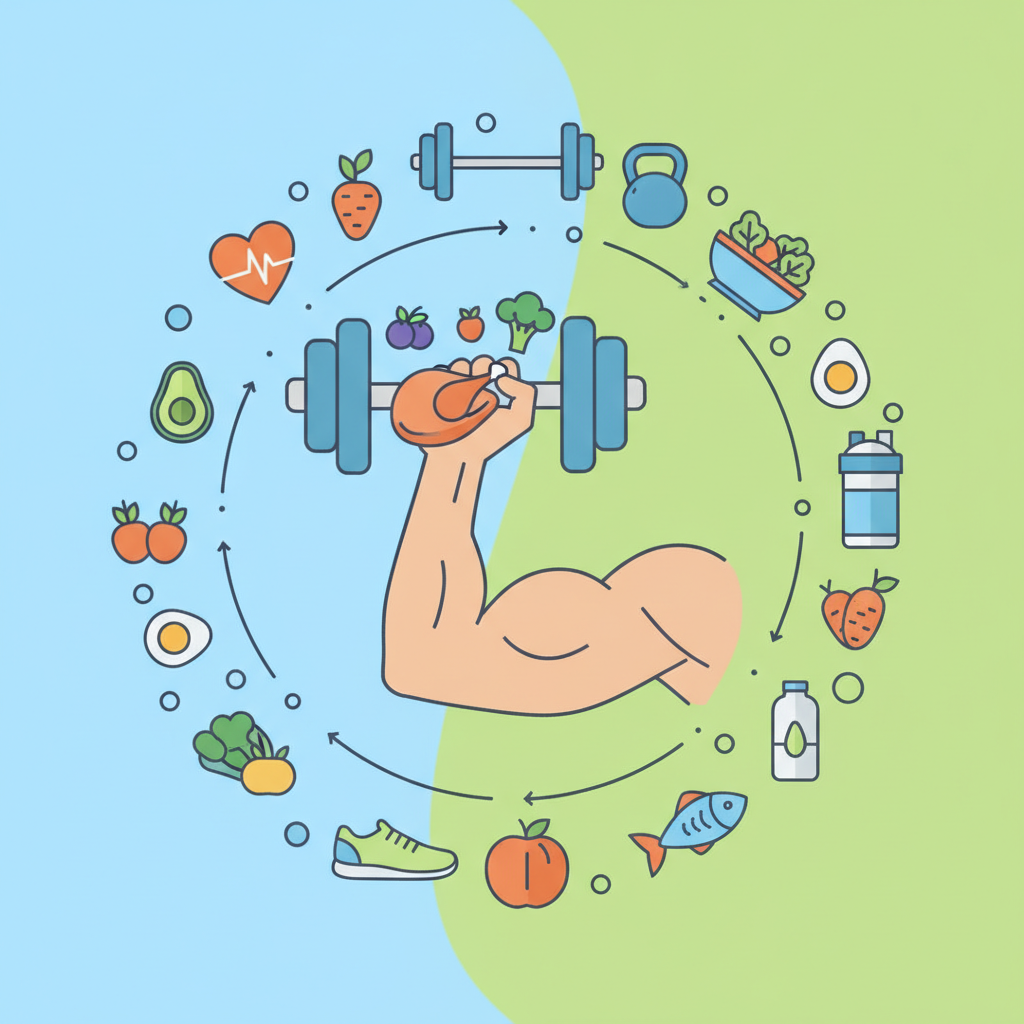
Building muscle isn't just about how hard you train. Your nutrition for muscle gain determines whether those hours in the gym translate into actual hypertrophy or simply leave you exhausted and spinning your wheels. This guide gives you precise, actionable calorie and macro targets so you can build a muscle building diet that actually works.
Why Nutrition Is the Foundation of Muscle Gain
Muscle growth requires two things working together: a consistent training stimulus and adequate nutritional fuel. Training creates the demand. Nutrition supplies the raw materials. Without both, the process stalls.
When you lift weights, you create microscopic damage in your muscle fibers. Your body repairs and rebuilds those fibers slightly thicker and stronger — a process called muscle protein synthesis (MPS). But MPS is energy-expensive. If you aren't eating enough calories and protein, your body simply cannot complete those repairs at the rate you need to see meaningful progress.
Here's how calories and macros interact to support hypertrophy:
- Calories determine whether you're in the energy surplus needed to build new tissue
- Protein provides the amino acids required for muscle repair and growth
- Carbohydrates replenish glycogen and support training intensity
- Fats regulate hormones that drive the anabolic environment
Nutrient timing also plays a supporting role. While the total amount you eat across the day matters most, distributing meals strategically — particularly around your training window — can optimize recovery speed and performance. Think of nutrition not as an afterthought but as the engine behind every rep you complete.
How Many Calories Do You Need to Build Muscle
To gain muscle, you need to eat above your Total Daily Energy Expenditure (TDEE). Your TDEE is the total number of calories your body burns each day, accounting for your basal metabolic rate plus your activity level. You can estimate it using an online TDEE calculator based on your weight, height, age, and how often you train.
Once you know your TDEE, add a calorie surplus for muscle gain. Research consistently supports a 250–500 calorie surplus above TDEE as the sweet spot for lean bulking. This range provides enough fuel to build muscle without accumulating excessive body fat.
Lean bulk vs. aggressive bulk:
- Lean bulk (250–300 calories above TDEE): Slower muscle gain, minimal fat gain, better body composition over time
- Aggressive bulk (500+ calories above TDEE): Faster scale weight increase, but a significant portion will be body fat
Going far beyond 500 extra calories doesn't accelerate muscle growth — it just adds fat you'll need to cut later.
Practical calorie targets by bodyweight:
- 150 lb individual: TDEE roughly 2,400–2,600 calories → target 2,650–3,000 calories for bulking
- 200 lb individual: TDEE roughly 2,800–3,200 calories → target 3,050–3,600 calories for bulking
Start at the lower end of the surplus and adjust every two to three weeks based on results.
Protein: The Most Critical Macro for Muscle Growth
When it comes to macros for muscle gain, protein is non-negotiable. Your protein intake for muscle growth should fall between 0.7 and 1.0 gram of protein per pound of bodyweight per day. For a 180 lb person, that means 126–180 grams of protein daily.
Protein supplies essential amino acids — particularly leucine — that directly trigger muscle protein synthesis. Higher protein intake also improves recovery between sessions, meaning you can train harder and more frequently.
Best high-protein food sources:
- Chicken breast (31g protein per 100g)
- Eggs and egg whites
- Greek yogurt and cottage cheese
- Fatty fish like salmon and tuna
- Lean beef and turkey
- Whey or plant-based protein powder as a convenient supplement
Equally important is how you distribute your protein. Spreading your intake across 3–5 meals per day maximizes MPS throughout the day compared to eating the same amount in one or two sittings. Each meal ideally contains 30–50 grams of protein to reliably stimulate synthesis. Consuming protein within 1–2 hours post-workout is also beneficial for recovery, though total daily intake remains the priority.
Carbohydrates: Your Primary Fuel for Training and Recovery
Carbohydrates are your body's preferred energy source during resistance training. When you train, your muscles burn through glycogen — stored glucose derived from carbs. Depleted glycogen impairs training intensity, reduces volume capacity, and slows recovery. A low-carb approach while trying to build muscle is a direct handicap to your progress.
For active individuals focused on hypertrophy, aim for 2–3 grams of carbohydrates per pound of bodyweight per day.
Best carbohydrate sources for a bulking nutrition plan:
- Oats and whole grain cereals
- White or brown rice
- Potatoes and sweet potatoes
- Fruits (bananas, berries, apples)
- Whole grain bread and pasta
Strategic carb timing:
- Pre-workout: 30–60 minutes before training, eat 30–50g of carbs to fuel performance
- Post-workout: Consume 50–80g of fast-digesting carbs alongside protein to replenish glycogen and accelerate recovery
Skipping carbs out of fear of fat gain is one of the most counterproductive choices you can make on a muscle building diet. Carbs don't make you fat — a sustained calorie excess does. Within your calculated surplus, carbs are your performance ally.
Dietary Fats: Supporting Hormones and Overall Health
Fats often get undervalued in a bulking nutrition plan, but they're critical for hormonal health. Testosterone, growth hormone, and other anabolic hormones rely on dietary fat for synthesis. Drop fat intake too low, and your hormonal environment shifts away from muscle building.
Target 0.3–0.5 grams of fat per pound of bodyweight per day. For a 180 lb person, that's roughly 54–90 grams of fat daily.
Best fat sources:
- Avocado and avocado oil
- Extra virgin olive oil
- Nuts and nut butters (almonds, walnuts, peanut butter)
- Fatty fish (salmon, mackerel, sardines)
- Whole eggs
Avoid trans fats entirely and limit heavily processed saturated fats. Beyond hormones, adequate fat intake also improves absorption of fat-soluble vitamins — A, D, E, and K — all of which support bone health, immune function, and recovery. Vitamin D in particular is closely linked to testosterone levels and muscle function.
Sample Daily Meal Plan for Muscle Gain
Here's a practical example of a ~2,600 calorie muscle gain meal plan structured for a 165 lb individual:
Breakfast — ~600 calories
- 1 cup oats with 1 scoop whey protein and 1 banana
- Macros: ~55g carbs, 40g protein, 8g fat
Lunch — ~700 calories
- 6 oz chicken breast, 1.5 cups rice, mixed vegetables with olive oil
- Macros: ~70g carbs, 50g protein, 14g fat
Pre-Workout Snack — ~300 calories
- Greek yogurt (1 cup) with mixed berries
- Macros: ~30g carbs, 20g protein, 4g fat
Dinner — ~650 calories
- 6 oz salmon, 1 medium sweet potato, steamed broccoli
- Macros: ~40g carbs, 42g protein, 18g fat
Before Bed — ~300 calories
- Post-workout shake or 1 cup cottage cheese with pineapple
- Macros: ~25g carbs, 30g protein, 5g fat
Daily Totals:
- Calories: ~2,550
- Protein: ~182g
- Carbohydrates: ~220g
- Fat: ~49g
Adjust portions up or down based on your specific TDEE and target surplus.
Common Nutrition Mistakes That Slow Muscle Gain
Even with the right knowledge, execution errors derail progress. Watch out for these frequent pitfalls:
- Eating too few calories: Training hard but staying in a deficit means your body prioritizes survival over growth
- Uneven protein distribution: Eating 10g at breakfast and 80g at dinner limits MPS despite hitting your daily target
- Fearing carbohydrates: Cutting carbs tanks your training intensity and glycogen recovery
- Inconsistent eating patterns: Skipping meals disrupts the steady amino acid availability your muscles need
- Over-relying on supplements: Protein powders and creatine support a solid diet — they don't replace one
- Not tracking intake: Most people significantly underestimate calories and protein without logging their food, which makes hitting targets guesswork
Consistency and accuracy together produce results. Even rough tracking — logging 5 out of 7 days — dramatically improves your ability to adjust and stay on course.
Frequently Asked Questions
How many calories should I eat per day to gain muscle?
Aim for 250–500 calories above your TDEE to create a sustainable calorie surplus for muscle gain. To find your TDEE, use an online calculator that factors in your weight, height, age, and weekly activity level. Start at the lower end of the surplus — around 250 calories over — and reassess every two to three weeks. If you're gaining more than 0.5–1 lb per week, you may be accumulating unnecessary fat and should scale back slightly.
How much protein do I need to build muscle?
Target 0.7 to 1.0 gram of protein per pound of bodyweight daily. A 170 lb person should aim for roughly 119–170 grams of protein per day. Spreading this across 3–5 meals optimizes muscle protein synthesis throughout the day. Prioritize whole food sources like chicken, eggs, fish, and dairy first, using protein supplements as a convenient top-up when whole foods fall short.
Should I eat more carbs or protein for muscle gain?
Both macros are essential, but they serve different roles. Protein provides the amino acids needed to repair and build muscle tissue — without adequate protein, growth stalls regardless of everything else. Carbohydrates fuel your workouts and replenish glycogen for recovery, directly affecting training quality and volume. Neglecting either macro will limit your results. Prioritize hitting your protein target first, then fill remaining calories with carbs and fats.
Can I build muscle without tracking macros?
Yes, it's possible — but significantly harder. Without tracking, most people underestimate calories or protein, which quietly keeps them below the threshold for consistent muscle growth. If you don't want to track everything, at minimum focus on portion-controlled, high-protein meals at regular intervals. However, even tracking for 4–6 weeks to establish a baseline gives you a much clearer picture of what you're actually consuming versus what you think you're consuming.
How long does it take to see results from a muscle gain diet?
Noticeable changes in muscle size and strength typically appear within 8–12 weeks when your nutrition and training are consistently optimized together. Early progress in the first few weeks often reflects strength gains from neuromuscular adaptation rather than visible hypertrophy. Muscle tissue itself grows slowly — expect roughly 0.5–2 lbs of lean muscle per month under ideal conditions. Patience and consistency with your bulking nutrition plan are what separate those who see transformation from those who plateau.
💪 Train smarter with f/ai — an AI coach builds a personal program for your goals and adapts as you progress. Get the app →
Try F/AI — AI Fitness Trainer
Personalized workout plans, AI trainer chat, photo body analysis.
Download for free