Full Body Workout for Beginners: A 4-Week No-Equipment Programme
Start your fitness journey with our full body workout for beginners. Follow this free 4-week no-equipment programme and build strength today. Get started now!
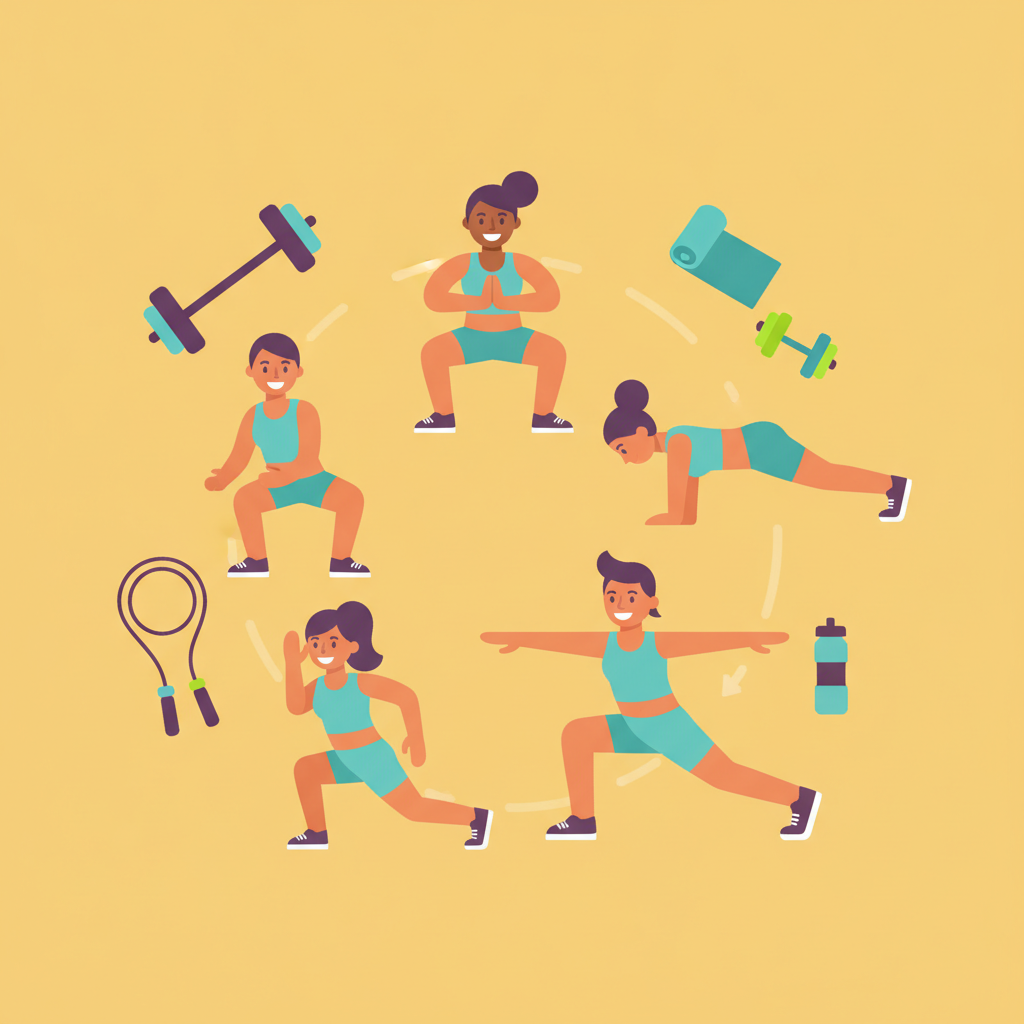
Starting a fitness journey can feel overwhelming, but the truth is you don't need a gym membership, expensive equipment, or hours of free time. A structured full body workout for beginners is one of the most efficient ways to build strength, improve fitness, and develop healthy habits — all from your living room. This guide gives you a complete 4-week no-equipment programme, expert exercise breakdowns, and the recovery advice you need to actually see results.
Why a Full Body Workout Is Perfect for Beginners
When you're new to exercise, the way you structure your training matters far more than how hard you push in any single session. A full body approach — where you train every major muscle group in each workout — is consistently the smartest choice for beginners, and here's why.
Maximum muscle activation in fewer sessions. Instead of dedicating separate days to chest, legs, and back like an experienced lifter might, you stimulate all your major muscle groups three times per week. This frequency accelerates neuromuscular adaptation, meaning your nervous system learns to recruit muscle fibres more efficiently — which is exactly what drives early strength gains.
Faster skill acquisition. Every time you perform a squat or a push-up, you're reinforcing that movement pattern. Training full body means you practise each exercise three times a week rather than once, which dramatically speeds up technique improvement.
Simultaneous fat loss and cardiovascular benefit. Compound bodyweight movements like squats and mountain climbers elevate your heart rate while building lean muscle. This dual stimulus burns calories during the session and raises your resting metabolic rate over time.
Full body beats split routines for novices. Muscle-group split routines make sense for advanced athletes managing high training volumes. For beginners, they're inefficient — missing one session means a muscle group goes untrained for two weeks. Full body training is more resilient and forgiving.
What You Need Before You Start
The barrier to entry for this beginner home workout routine is intentionally low. Here's what to prepare:
- Equipment: Nothing beyond a yoga mat or a carpeted floor and comfortable, breathable clothing.
- Medical clearance: If you have any pre-existing joint, cardiovascular, or orthopaedic conditions, consult your doctor before beginning any new exercise programme.
- Realistic expectations: Visible results from a bodyweight workout plan typically appear between weeks 3 and 6. However, you'll notice improved energy, better sleep, and reduced breathlessness within the first two weeks — these are real progress markers.
- Warm-up and cool-down commitment: These aren't optional extras. Structured warm-ups reduce injury risk and improve workout performance, especially for beginners whose connective tissues are adapting to new stress.
Set aside 30–45 minutes per session, three to four days per week, and keep your phone nearby only for timing — distractions kill workout quality.
The Core Exercises in Your Beginner Programme
This no-equipment programme is built around six fundamental movements. Master these, and you'll have the foundation for any future strength training for beginners.
Squats Stand feet shoulder-width apart, toes slightly out. Push your hips back and down, keeping your chest tall and knees tracking over your toes. Descend until your thighs are parallel to the floor. Modification: squat to a chair to control depth. Muscles worked: quads, glutes, hamstrings, core.
Push-Ups Start in a high plank, hands slightly wider than shoulder-width. Lower your chest to the floor, keeping elbows at a 45-degree angle from your body. Beginner variation: drop to your knees while maintaining a straight line from knee to shoulder. Progress to full push-ups as strength builds.
Glute Bridges Lie on your back, knees bent, feet flat. Drive through your heels to lift your hips until your body forms a straight line from shoulders to knees. Squeeze your glutes at the top. This movement protects your lower back by strengthening the posterior chain safely.
Plank Holds Forearms on the floor, elbows below shoulders, body in a straight line from head to heels. Start with 20-second holds and progress by 5 seconds each week. Never let your hips sag or pike.
Reverse Lunges Step one foot directly back, lower your rear knee toward the floor, then drive through your front heel to return to standing. Reverse lunges are safer for beginners than forward lunges because they reduce shear force on the knee.
Mountain Climbers From a high plank, drive alternate knees toward your chest in a controlled, rhythmic motion. Keep your hips level. Slow the tempo down if your form breaks — cardiovascular benefit comes from consistency, not just speed.
Your 4-Week No-Equipment Workout Plan
Follow this progressive schedule. Train on non-consecutive days (e.g. Monday, Wednesday, Friday) to allow full recovery between sessions.
| Week | Sessions | Sets | Reps / Duration | Rest Between Sets |
|---|---|---|---|---|
| 1 | 3 | 2 | 8–10 reps / 20s plank | 60 seconds |
| 2 | 3 | 3 | 10–12 reps / 25s plank | 60 seconds |
| 3 | 4 | 3 | 12 reps (3s lowering) / 30s plank | 45 seconds |
| 4 | 4 | 3–4 | 12–15 reps / 35s plank | 30 seconds |
Week-by-week coaching notes:
- Week 1: Prioritise form above all else. Two sets feels easy — that's intentional. You're building movement literacy, not chasing fatigue.
- Week 2: Add a third set and introduce supersets — pair squats with glute bridges and push-ups with plank holds — to increase training density without adding time.
- Week 3: Introduce time-under-tension by slowing your eccentric (lowering) phase to 3 seconds. This builds strength without adding reps.
- Week 4: Reduce rest periods to 30 seconds to increase metabolic demand. By now, your technique should be solid enough to maintain form under fatigue.
Sample weekly schedule:
- Monday: Full body session
- Tuesday: Rest or active recovery
- Wednesday: Full body session
- Thursday: Rest or active recovery
- Friday: Full body session (Weeks 1–2) / add Saturday session (Weeks 3–4)
- Weekend: Rest
How to Warm Up and Cool Down Properly
A proper warm-up isn't just a formality — skipping it is one of the most common reasons beginners pick up avoidable injuries in their first month.
5-minute dynamic warm-up:
- Leg swings (forward and lateral) — 10 per leg
- Hip circles — 10 per direction
- Arm circles — 10 forward, 10 backward
- Bodyweight squats (slow, partial depth) — 10 reps
- Cat-cow stretches — 8 slow repetitions
Dynamic movements increase blood flow, raise muscle temperature, and lubricate your joints before load is applied.
10-minute cool-down: After training, hold each of these static stretches for 30–45 seconds:
- Standing quad stretch
- Seated hamstring stretch
- Glute figure-four stretch
- Child's pose (for lower back and hips)
- Chest doorframe stretch
- Hip flexor lunge stretch
Finish by taking 10 slow diaphragmatic breaths — inhale for 4 counts, exhale for 6 — to activate your parasympathetic nervous system and bring your heart rate down efficiently.
Nutrition and Recovery Tips to Support Your Progress
Training is the stimulus; recovery is where the actual adaptation happens. Your beginner fitness programme will only deliver results if you support it properly.
Protein: Aim for roughly 1.6g of protein per kilogram of bodyweight daily. Focus on whole food sources — eggs, chicken, Greek yoghurt, legumes, and fish. You don't need supplements initially.
Hydration: Drink 500ml of water before your session, sip consistently during, and rehydrate with at least 500ml afterwards. Even mild dehydration reduces strength and cognitive focus.
Sleep: This is your most powerful recovery tool. Seven to nine hours of quality sleep per night is when your body releases growth hormone and repairs muscle tissue. Prioritising sleep will accelerate your results more than any supplement.
Active recovery: On rest days, a 20–30 minute walk, a light yoga session, or gentle stretching keeps blood moving through recovering muscles without creating additional fatigue.
Avoid the biggest beginner mistake: training every single day because motivation is high in week one. Overtraining leads to burnout, elevated injury risk, and stalled progress. Rest days are productive days.
How to Progress Beyond the 4-Week Programme
After four weeks, you should be noticeably stronger, more coordinated, and recovering faster. Here's how to know you're ready to advance — and what to do next:
Signs you're ready to progress:
- You complete all sets and reps without significant form breakdown
- Your rest periods feel too long
- You finish sessions without feeling adequately challenged
Apply progressive overload without equipment by manipulating:
- Tempo (slower eccentrics, pauses at the bottom)
- Single-limb variations (single-leg squats, single-arm push-ups)
- Plyometric progressions (jump squats, explosive push-ups)
Next equipment step: A resistance band set costs under £15 and opens up dozens of new exercises. From there, a pair of adjustable dumbbells enables proper intermediate-level strength training.
Track everything. A workout journal or fitness app that logs your sets, reps, and how each session felt is the single most reliable predictor of long-term progress. What gets measured gets improved.
Intermediate options to explore: A structured 6-week progressive bodyweight programme, resistance band full body training, or a beginner barbell programme if gym access becomes available.
Frequently Asked Questions
How many days a week should a beginner do a full body workout?
Three days per week with at least one rest day between sessions is the optimal starting frequency for beginners. This schedule gives your muscles, joints, and nervous system adequate time to recover and adapt between training stimuli. Training more frequently too soon is one of the most common beginner errors — it increases injury risk, promotes burnout, and can actually slow progress by preventing full recovery. Once you've completed four to six weeks at three sessions per week and your body has adapted, you can consider progressing to four sessions weekly.
Can I lose weight with a no-equipment full body workout?
Yes — bodyweight training is highly effective for weight loss when paired with a calorie-controlled diet. Compound movements like squats, push-ups, and mountain climbers burn a significant number of calories per session and, crucially, build lean muscle mass. Muscle tissue is metabolically active, meaning it raises your resting metabolic rate — the number of calories you burn at rest. Over weeks and months, this combination of calorie burn during exercise and an elevated baseline metabolism creates meaningful, sustainable fat loss without a single piece of equipment.
How long should a beginner full body workout session last?
Thirty to forty-five minutes, including your warm-up and cool-down, is the ideal session length for beginners. This duration is long enough to deliver a meaningful training stimulus across all major muscle groups but short enough to prevent excessive fatigue and overtraining. Sessions that run beyond 60 minutes for beginners typically indicate excessive rest periods or unnecessary exercise volume rather than superior training quality. Keep your sessions focused, limit distractions, and prioritise movement quality over time spent in the session.
What if I cannot do a full push-up yet?
Start with the knee push-up variation. Lower yourself to your knees while maintaining a straight line from your knees to your shoulders — don't let your hips sag or your lower back arch. This variation still effectively targets your chest, shoulders, and triceps while reducing the percentage of bodyweight you're pressing. Perform your knee push-ups with perfect form for two to three weeks, gradually increasing reps, then attempt one or two full push-ups at the start of each set before dropping back to your knees. Most beginners transition to full push-ups within three to four weeks using this method.
When will I start seeing results from a beginner workout programme?
Most beginners notice improved energy levels, better sleep quality, and reduced breathlessness during daily activities within the first two to three weeks — these are genuine physiological adaptations and early results worth celebrating. Visible physical changes, such as improved muscle tone and a leaner appearance, typically become noticeable between weeks four and six, particularly when training is supported by good nutrition and adequate sleep. Remember that the internal adaptations happening in weeks one and two — improved cardiovascular efficiency and neuromuscular coordination — are building the foundation that makes visible results possible.
💪 Train smarter with f/ai — an AI coach builds a personal program for your goals and adapts as you progress. Get the app →
Try F/AI — AI Fitness Trainer
Personalized workout plans, AI trainer chat, photo body analysis.
Download for free