f/ai or a personal trainer at the gym: what to choose if you want real progress
The fitness industry is changing faster than most people notice. Five years ago the choice was obvious: want progress — hire a personal trainer. Today that standard has a serious competitor — an AI training coach. The question is no longer whether the technology works, but whether it is ri
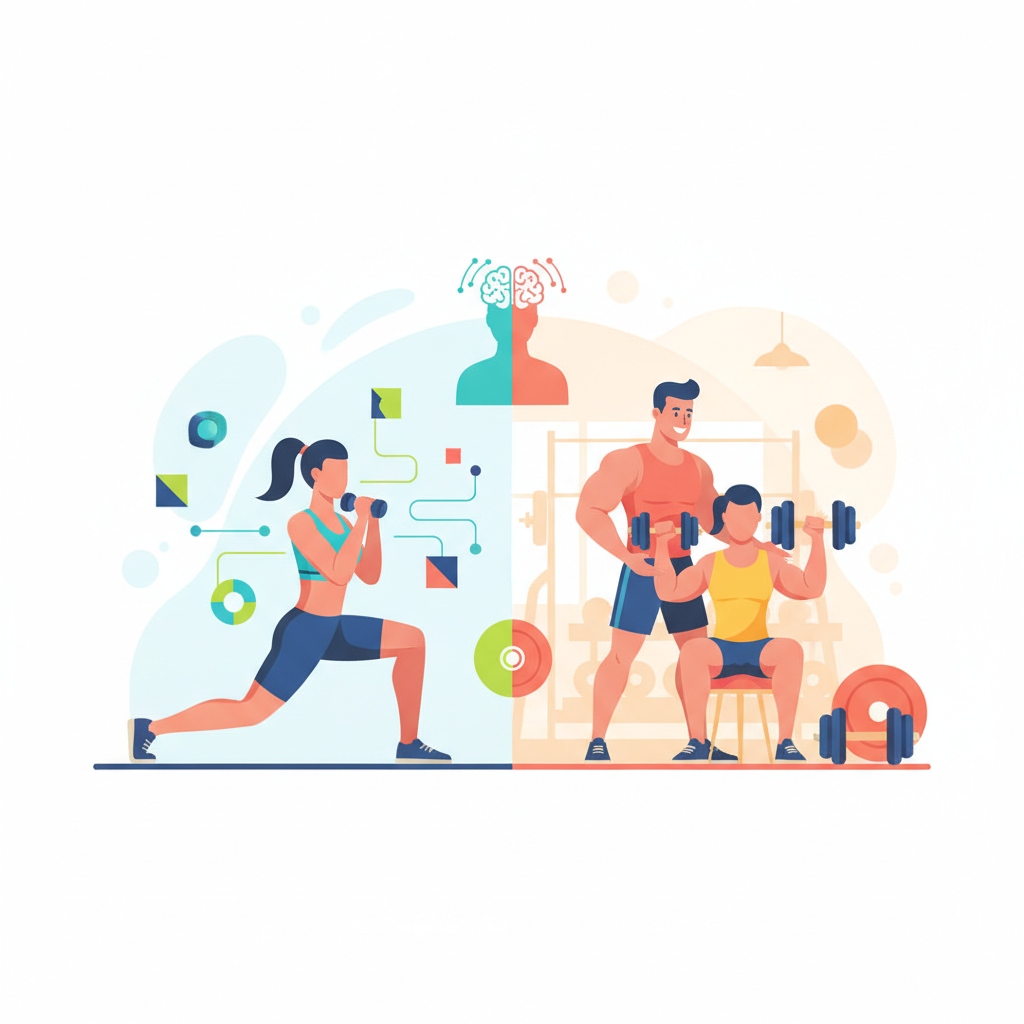
The fitness industry is changing faster than most people notice. Five years ago the choice was obvious: want progress — hire a personal trainer. Today that standard has a serious competitor — an AI training coach. The question is no longer whether the technology works, but whether it is right for you.
The core question: two approaches to training
Over the past few years, artificial intelligence tools have entered sport, medicine and education. Fitness is no exception. The growing interest in AI solutions has a simple explanation: most people want a personalised approach but cannot always afford to pay regularly for a live specialist or fit into their schedule.
A personal trainer is the classic standard for individual work. A real person by your side who sees you, knows your weaknesses and reacts in real time. This format has existed for decades and has proved its worth.
On the other hand, a new generation of apps has emerged in which the algorithm takes on the role of a coach. f/ai — the AI trainer app (fitgpt.pro) — is one clear example: the system analyses your parameters and builds a complete training programme without the involvement of a live specialist.
Why is this comparison relevant right now? Because the market is flooded with solutions of varying quality and many people get lost when choosing. This article will help you make sense of it without unnecessary noise.
How f/ai works: the principle and logic of the system
An AI trainer works differently from a simple app with ready-made video routines. The logic of f/ai is built on personalisation: at first launch the system collects data across 23 parameters — goal (muscle gain, weight loss, strength growth, maintaining fitness), experience level, available equipment, health status, stress and sleep levels, training location. Based on this profile the algorithm creates an individual programme rather than issuing a generic template.
The key advantage is adaptation. The system tracks workouts: sets, weight, reps and results history. If you are progressing faster than expected or, conversely, stalling, the programme adjusts. You can read more about how f/ai tracks training progress and what exactly the AI trainer records in a dedicated article.
Interaction with the system happens through the app interface: you set goals, enter parameters and receive a structured plan with video instructions and a rest timer. An unlimited chat with the AI trainer is also available — it remembers the context of the conversation and answers questions on technique, nutrition and recovery. If an exercise is unsuitable due to an injury or missing equipment, the system will suggest a smart alternative.
The main point here is that the user gets a structured plan without being tied to a live trainer's schedule. Workouts are available in the gym, at home or outdoors — depending on what you specified in your profile.
What a live personal trainer at the gym provides
A live trainer means above all real-time technique control. This is critical, especially for compound exercises: barbell squats, deadlifts, bench press. Technique errors are invisible to the beginner but obvious to a specialist standing nearby. According to the American Council on Exercise, the majority of gym injuries are caused by poor technique rather than excessive load. Read more about mistakes to avoid in 5 main beginner mistakes in the gym.
A trainer corrects you instantly mid-set: adjusts knee alignment, monitors a neutral spine, watches the range of motion. No app can yet fully replace this live control.
Beyond technique, a live specialist provides psychological support. Motivation is one of the key factors in long-term progress. A trainer senses your state: when to push, when to back off, when to praise. They respond flexibly during the session itself — they can reduce volume if you arrive tired, or add load if you have extra energy today.
Another argument in favour of a live specialist is the individual approach when health issues are present. If you have spinal problems, joint issues or chronic conditions, a skilled trainer will structure the work to account for your limitations, consulting a doctor where necessary.
Key differences: comparison table
| Criterion | f/ai (AI trainer) | Personal trainer |
|---|---|---|
| Availability | 24/7, anywhere | By schedule, at the gym |
| Personalisation | Based on 23 profile parameters | Based on the trainer's observations |
| Technique control | Video instructions, no live control | Live real-time control |
| Adaptation to progress | Automatically based on training data | At the trainer's discretion |
| Psychological motivation | Through the interface and chat | Live emotional contact |
| Working with injuries | Smart exercise substitution | Full programme adaptation |
| Cost | App subscription | Payment per session |
| Schedule flexibility | Complete | Depends on the trainer |
The table shows that both formats have strengths and neither is universally better. Everything depends on your fitness level, goals and circumstances.
When f/ai is the better choice
There are several situations in which an AI training coach will be the optimal solution:
- You already have basic experience. If the technique of compound exercises is established, live control becomes less critical. You know how to move and what you primarily need is a well-structured programme.
- You cannot train on a rigid schedule. Business trips, irregular working hours, family commitments — the AI trainer is available at any time and adapts to you, not the other way around.
- Independence matters to you. Many people feel more comfortable when nobody is standing next to them and watching. The app gives you that freedom without losing structure.
- You want to train in different places. f/ai supports training at home, in the gym and outdoors — the programme adapts to the available equipment. Read more about this in the article f/ai for home workouts.
- You need a specific goal with a system. Muscle gain, weight loss, strength growth — you can explore how f/ai builds a training programme for specific goals separately.
When a live trainer is the better choice
A live specialist at the gym is irreplaceable in a number of cases:
- You are a beginner. If exercise technique has not yet been established, the risk of injury when training alone is significantly higher. It is better to spend the first months under the supervision of a specialist. Strength training for beginners requires particular attention to movement form.
- You have health considerations. Herniated discs, knee problems, hypertension, post-injury rehabilitation — these are situations where a live professional is necessary. An algorithm can suggest exercise substitutions but cannot replace medical expertise.
- You struggle to maintain discipline. If you know you tend to skip workouts without external accountability — a trainer creates responsibility. A paid session is a powerful motivator to show up.
- You need live emotional contact. Some people simply perform better in the presence of another person. That is not a weakness — it is a characteristic worth factoring in when choosing a format.
Can you combine both formats
A hybrid approach is becoming increasingly popular — and for good reason. The logic is straightforward: a trainer sets your technique and eliminates critical errors, while the AI trainer guides your independent sessions in between.
A practical scheme looks like this:
- The first 4–8 weeks — working with a live trainer to master fundamental movement patterns.
- After that — transitioning to independent training with an f/ai programme, with periodic specialist check-ins (once a month or as needed).
- When a goal changes or progress stalls — returning to the trainer to reassess the approach.
This combination addresses the weak points of both formats: live oversight at the start reduces the risk of injury, while the AI ensures continuity and programme adaptation throughout the entire journey. A comparative analysis of both approaches across seven criteria can be found in personal trainer or fitness app: what to choose in 2025.
What to consider when choosing: practical criteria
Before making a decision, answer a few questions honestly:
- What is your fitness level? If you have less than 6 months of experience — a live trainer at the start will reduce the risks.
- What is your budget? Regular sessions with a trainer are a significant expense. An AI trainer costs considerably less for a comparable level of programme personalisation.
- How disciplined are you? An honest assessment here matters more than the image you would like to have of yourself.
- Do you have any health restrictions? With chronic conditions or injuries — an initial consultation with a doctor and a trainer is essential.
- Where and when do you train? An unpredictable schedule and varying locations are arguments in favour of the AI format.
For those who are just starting out, it is worth studying the 6-week beginner training programme — it will help you understand what volume of work lies ahead and how much guidance you need.
FAQ
Can an AI trainer fully replace a live specialist?
For most people with an intermediate level of fitness or above — yes, in terms of programming workouts and tracking progress the AI performs at a high level. However, the algorithm cannot yet replace live real-time technique control. If you are a beginner or recovering from an injury, a live trainer is necessary at least at the initial stage. For experienced athletes who are confident in their technique, an AI trainer provides everything needed for structured progress without being tied to a schedule.
How personalised are the programmes from f/ai?
f/ai collects data across 23 profile parameters: goal, experience, equipment, health status, stress level, sleep quality, training location and much more. Based on this data the system builds a programme that is adjusted as you progress. This is significantly deeper than standard templates found online and approaches the level of working with a live specialist in terms of load planning.
What if I have no equipment or I have an injury?
f/ai provides smart exercise substitutions that account for injuries and available equipment. If you do not have a barbell or your knee is sore — the system will suggest alternatives without breaking the logic of the programme. For serious injuries or chronic conditions, a consultation with a doctor is recommended before beginning training regardless of the format chosen.
Can the AI trainer be used for home workouts?
Yes, f/ai supports training in the gym, at home and outdoors. When setting up your profile you specify your training location and available equipment — the programme adapts accordingly. This makes the format particularly convenient for those who alternate between training at home and at the gym.
How quickly does the AI trainer respond to changes in progress?
The system analyses the data from every workout: weights, reps, sets and results history. Adaptation happens on the basis of accumulated data — the more regularly you train and log your results, the more accurate the recommendations become. You can read more about the mechanics of progressive overload in f/ai and progressive overload.
💪 Train smarter with f/ai — the AI trainer will build a personalised programme for your goals and adapt it to your progress. Download the app →
Try F/AI — AI Fitness Trainer
Personalized workout plans, AI trainer chat, photo body analysis.
Download for free